Modified on: 10/07/2026
A quick transparency check before comparing bottles
A CBD oil transparency checklist is the short pause a reader takes before trusting a product page too quickly. It is a small routine, not a verdict: a handful of things to look for so a page can be checked rather than taken on faith. This guide sets out that routine, because the plain parts of a page, the label, the batch number and the document, usually do the work that loud wording should not.
-
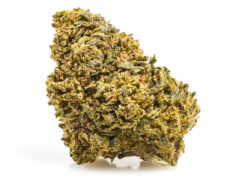
 Max CBDAMNESIA CBD BOOSTStarting from: 0,85€/g
Glasshouse | CBD<40%
Grams5 10 20 50 100 200 400 -
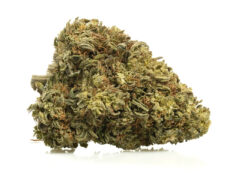
Max CBDAK47 CBD BOOSTStarting from: 1,45€/g
Indoor | CBD<47%
Grams5 10 20 50 100 200 -
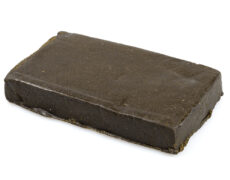
Max CBDCHARAS
CBD HASH | CBD<45%
Starting from:FLASH SALE -10%
0,90€0,80€/gGrams5 10 20 50 100 200 -
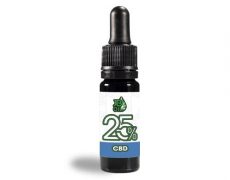
JB OIL 25%Starting from: 14,90€
CBD Oil 25%
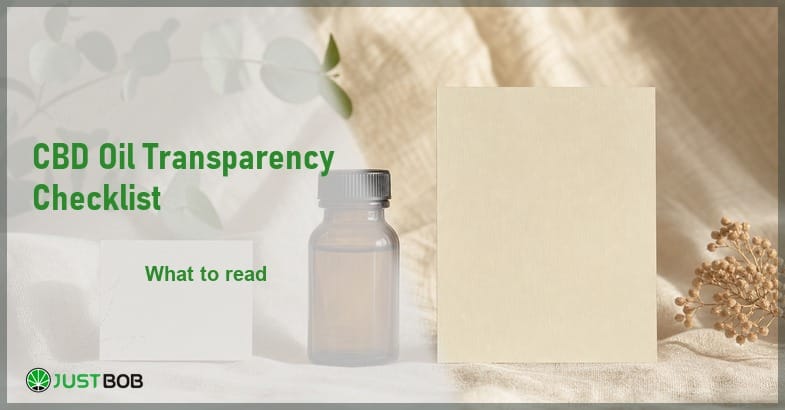
Picture a checklist desk with a bottle, its label and a blank sheet laid out side by side. The checklist is not dramatic. It is a list of small, checkable things, and running through it is what turns a confident page into a confirmed one, item by item.
What a CBD oil transparency checklist means
A CBD oil transparency checklist is a reader routine for the parts of a product page that can be verified: the label entries, the batch identity, the documents and the consistency between them. None of those items describe what an oil does. Each one is something a reader can look at and confirm, so the checklist stays on what is visible and recorded rather than anything claimed.
Kept at that level, transparency stops being a slogan and becomes a short list. A page either gives a reader the things on the list, or it does not, and that simple test is the whole purpose of the routine. The checklist names the items so anyone can run through them, bottle by bottle.
Label and batch identity
The first items on the list are the label and the batch number. A clear label names the product, gives the indicative figures and shows a batch reference. The batch number is the small detail that matters most, because it ties the specific bottle in front of a reader to a specific lot and its document.
Read together, the label and the batch identity let a reader move from the bottle to its record. A figure on the label points to a row on a document for that lot, so the printed claim and the measured figure can be checked side by side. For the related routine on the certificate itself, our CBD Oil Certificate Checklist: What To Read covers that single item in more depth.
Read also: CBD Oil Lab Testing: What a Certificate Can Tell You
Product documents
The next item is the document itself. A transparent page keeps the certificate of analysis within reach, so a reader can open it rather than take the label alone. That document carries the measured rows: the CBD figure stated as indicative, the THC reading checked against the 0.3 percent threshold, and the other compounds tested for the batch.
This is the heart of the routine. A page that lets a reader open the document for the matching batch passes the item; a page that asks for trust without one does not. Third-party records belong here too, since an independent check is part of what transparency means on a product page rather than off it.
A short routine that prevents a missed step
The value of a written routine is an old lesson. In 1935, a new and capable aircraft, the Boeing Model 299, crashed on a test flight because a single step had been missed before take-off. The response was not a more talented pilot but a better habit: a short written checklist, run before every flight, so that no essential step is ever left to memory.
A transparency checklist works in the same plain spirit. It is not there because anything is wrong; it is there so a reader never skips the one item that matters, the batch number, the document, the matching figure. The pilots wrote a list so nothing was taken on trust, and a product page is read the same careful way, one item at a time.

Read also: How to store CBD oil properly
Page consistency and the checklist itself
The last item is consistency: the label, the figures and the document should all agree. When the name, the indicative figure and the batch number match across the page and the certificate, the page is internally consistent and the routine is complete. Put together, the checklist is short:
- A clear label with the product name and indicative figures.
- A batch number that appears on both the label and the document.
- A certificate of analysis that can be opened from the page.
- A THC row read against the 0.3 percent threshold for the lot.
- Agreement between the label, the figures and the certificate.
Each item is a look, not a leap. None of them asks a reader to believe anything; they ask a reader to check. For independent published research on hemp and its compounds, the PubMed research database holds the wider literature these checks sit alongside.
What the checklist avoids
It is worth being plain about the limits. A CBD oil transparency checklist looks at labels, batch identity, documents and consistency, and stops there. It makes no claim about results, it offers no promise of any kind, and it stays strictly on what a reader can verify on the page. Anything else sits entirely outside a transparency routine.
So the checklist is read for exactly what it is: a short list of checkable things, confirmed on the page. It does not tell a reader what to expect from a product; it only helps them confirm that a page can be checked, which is the single thing a transparency checklist is there to do.
A transparency checklist on a Justbob page
On a CBD oil page, the checklist runs quickly: a clear label, a batch number, a certificate kept inside the product page, and agreement between them. Every commercialised product is analysed and each batch is checked, with the document kept on the page, so each item on the list can be confirmed rather than taken on trust.
Every product sits inside the EU industrial hemp framework, with THC kept at or below the 0.3 percent threshold harmonised at European level, and is offered for technical, scientific and ornamental purposes only. Read this way, on a Justbob page a CBD oil transparency checklist is simply the short routine that confirms each figure has a document behind it.
Frequently asked questions about cbd oil transparency checklist
What is a CBD oil transparency checklist?
It is a short reader routine for the verifiable parts of a product page: the label entries, the batch identity, the certificate of analysis and the consistency between them. Each item is something a reader can look at and confirm rather than a description of what an oil does. Running through the list is how a reader moves from a confident page to a confirmed one, checking each figure against the document for the specific batch in hand.
Does this checklist make any claim about the product?
No. The checklist only points at things a reader can verify: a label, a batch number, a document and the agreement between them. It offers no promise and says nothing about results or anything beyond the page, because those subjects sit outside a transparency routine. The aim is simply to confirm that the page can be checked, not to describe the product.
Where are product documents found?
On a transparent page, the certificate of analysis is kept with the product itself, so the batch can be opened and read rather than taken on the label alone. The document carries the measured rows, including the CBD figure stated as indicative and the THC reading checked against the 0.3 percent threshold, each tied to the batch number that also appears on the label.