
Modified on: 25/07/2026
The Unshowy Checks Behind a CBD Flower
A CBD flower can look beautiful in a photo: a compact shape, resin-rich trichomes, a careful trim, and colours that reveal a lot at first glance. But the least eye-catching document is often the one that provides the most valuable information. That document is the Certificate of Analysis (COA)—the lab report that accompanies a specific batch and helps readers understand what lies behind a product page.
In this context, Justbob treats laboratory documentation as part of the product story, not as a footnote hidden away.
-
 Max CBDAMNESIA CBD BOOSTStarting from: 0,85 €/g
Glasshouse | CBD<40%
Grams5 10 20 50 100 200 400 -
Max CBDAK47 CBD BOOST
Indoor | CBD<47%
Starting from:HALLOWEEN SALE -10%
1,45 €1,30 €/gGrams5 10 20 50 100 200 -
Max CBDCHARAS
CBD HASH | CBD<45%
Starting from:HALLOWEEN SALE -10%
0,90 €0,80 €/gGrams5 10 20 50 100 200 -
JB OIL 25%Starting from: 14,90 €
CBD Oil 25%
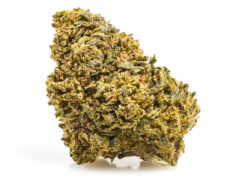
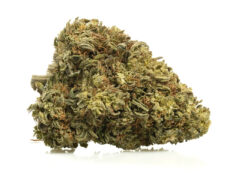
CBD flower lab testing is not a particularly glamorous topic, and that’s precisely why it matters. It is practical, technical, and reassuringly objective. The goal is not to turn a flower into a chemistry lesson, but to give customers a reliable way to compare a product description with its batch number, cannabinoid profile, and compliance with the THC limits applicable to industrial hemp.
Think of it as a passport for a batch. A passport does not tell you everything about a person, and a Certificate of Analysis does not tell you everything about a flower. However, both provide a verified connection between a name, a date, and a set of measurable details.
What CBD flower lab testing means
CBD flower lab testing refers to analytical testing carried out on a sample taken from a specific production batch. The results are typically presented in a Certificate of Analysis (COA). Put simply, it is a document that reports measurable data instead of marketing claims.
One of the most important sections of a COA is the cannabinoid profile. Here you’ll usually find the percentages of CBD and THC, together with other cannabinoids when they have been analysed. Although the format may vary between laboratories, the principle is always the same: a sample is tested, the results are recorded, and those results are linked to a specific batch.
This connection is particularly important for CBD flowers, as they are natural plant material. Even within a carefully managed supply chain, slight variations between batches are normal. Two flowers from the same cultivar may differ slightly in appearance, aroma, or cannabinoid composition. A lab report helps keep product information grounded in objective data. Less guesswork, more traceability.

Read also: CBD Oil Lab Testing: What a Certificate Can Tell You – Justbob
Why the batch number is the anchor
The real unsung hero of CBD flower lab testing is the batch number.
It may not be the most exciting detail on a product page, but it is one of the most important. The batch number links together the product label, the Certificate of Analysis, and the physical product itself. Without that connection, a lab report becomes little more than an isolated document.
A reliable COA should clearly indicate:
- the batch number;
- the analysis date or report date;
- the laboratory results associated with that specific batch.
The analysis date is not simply a formality. It helps customers understand when the sample was tested, which batch it belongs to, and whether the report genuinely corresponds to the product they are viewing.
For this reason, Justbob makes the laboratory analyses available directly on the product pages. Every batch of the products commercialised on the website undergoes continuous laboratory testing, allowing customers to consult the relevant documentation without searching elsewhere. This approach reflects a simple but important principle: when laboratory documents are easily accessible, transparency becomes part of the shopping experience rather than an afterthought.
The batch number also helps prevent one of the most common problems in online retail: attractive product claims that cannot be verified. A claim without a batch reference is difficult to check; a claim linked to a specific batch gives customers something concrete they can verify.
How to read a cannabinoid profile
The cannabinoid profile is often the first section readers look at in a Certificate of Analysis (COA). It typically lists the concentrations of CBD, THC, and, depending on the scope of the analysis, other naturally occurring cannabinoids present in the flower. For industrial hemp products, THC is one of the most closely monitored values. Product descriptions and laboratory documentation should always remain consistent with the legal framework governing industrial hemp.
At EU level, the European Commission explains that hemp cultivated under the CAP (Common Agricultural Policy) must come from certified varieties and comply with the applicable THC limits. The Commission states that only certified seed from varieties included in the EU Common Catalogue may be used for CAP eligibility, and that these varieties must respect the established THC threshold for industrial hemp.
This is not a legal opinion, but it helps explain why THC values, batch documentation, and certified hemp varieties are consistently referenced by responsible CBD retailers. The best way to interpret a cannabinoid profile is to keep it in context:
- read the cannabinoid values;
- verify that they correspond to the correct batch;
- consider the analysis together with the Certificate of Analysis;
- avoid interpreting laboratory data as marketing claims or promises.
The CBD percentage deserves the same careful interpretation. It represents the result measured from a specific tested sample, not a generic characteristic of every flower. Since CBD flowers are natural agricultural products, small variations between batches are normal, even when the same cultivar is used.
For this reason, the cannabinoid profile is most meaningful when it is linked to the correct batch number and supported by the corresponding Certificate of Analysis. The value itself is important, but its real significance comes from the traceability behind it.

What a certificate of analysis can show
A Certificate of Analysis (COA) can provide several useful pieces of information. The most common include cannabinoid values, the identity of the tested sample, the laboratory name, the report date, and, in some cases, the testing methods used. Some reports may also include terpene profiles or additional quality assessments, depending on the analyses requested and the services provided by the laboratory.
A Certificate of Analysis is most valuable when it is clearly linked to a specific batch. A document without a clear product or batch reference is far less useful than a straightforward report with an identifiable batch code. The best approach is simple:
- match the product to the Certificate of Analysis;
- verify the batch number;
- review the cannabinoid values;
- check the report date;
- then interpret the product information with the proper context.
It is also important to distinguish a Certificate of Analysis from marketing language. Product descriptions are designed to communicate key features quickly, while a COA presents measurable laboratory data in the form of numbers, tables, and units. That may seem less engaging, but it is precisely what makes the document valuable. Objective data provides transparency where marketing alone cannot.
The European Commission also provides information on the EU Common Catalogue of plant varieties and the broader system governing registered agricultural varieties. This framework helps explain why certified hemp varieties, batch documentation, and traceability play such an important role throughout the European hemp supply chain.
What CBD certificates should make clear
CBD certificates is a phrase readers often encounter online, but the more accurate term is Certificate of Analysis (COA). Regardless of the wording, the document should make the essentials easy to identify: the tested sample, the batch reference, the laboratory identity, the report date, and the analytical results. If the analysis has been performed by a third-party or accredited laboratory, that information should be clearly visible without requiring readers to search for it.
Some COAs for CBD products may also include additional quality assessments, such as moisture content, heavy metal screening, microbiological testing, or other requested analyses. However, not every Certificate of Analysis covers the same parameters. For this reason, readers should evaluate what is actually included in each report rather than assuming that every COA contains every possible test.
This is where CBD flower lab testing becomes genuinely useful. A Certificate of Analysis is not designed to impress with marketing language. Its purpose is to answer straightforward questions with objective information:
- Which batch was tested?
- Which sample was analysed?
- Which tests were performed?
- What were the laboratory results?
That level of clarity may be less eye-catching than promotional claims, but it is far more valuable when assessing the quality and traceability of a CBD flower.
What lab testing should not be asked to promise
CBD flower lab testing has a clear job, but it is not magic. It should not be used to suggest personal outcomes, personal suitability, or any kind of bodily result. It is a product-documentation tool. It can describe measured values and batch details. It cannot replace common sense, local rules, product labels, or the technical purpose for which Justbob products are sold.
This distinction is more than a legal precaution. It is good writing. When a lab report is presented honestly, it becomes more credible. When it is stretched into a grand promise, it starts to lose value. We prefer the honest version: a COA helps you read the product better, not imagine things the product page should never claim.
For Justbob, the product frame remains technical, scientific, ornamental, and for environmental fragrance. The label language is there for a reason. Lab results sit beside that frame. They support traceability, batch clarity, and product comparison, but they do not change the intended positioning of the product.
The same applies to words such as “purity” or “quality“. They need care. A report can document values. A product page can explain controls. But broad claims should always give way to specific details: which batch, which analysis, which values, which document. The more precise the wording, the less it has to shout.
How Justbob keeps product documents close to the product
The most useful place for a certificate of analysis is near the product it belongs to. Nobody wants to go hunting through a maze just to check a batch. This is why Justbob places analysis documents inside the pages of each commercialised product, so the reader can move from description to documentation without losing the thread.
The routine matters too. Justbob carries out constant analyses on all products commercialised and on every lot. That point is not a decorative phrase for the end of the article. It is the working method behind product documentation: every lot should be connected to checks, and those checks should be accessible from the product page.
For readers browsing CBD flower, this makes product comparison cleaner. The flower photo shows the visible side. The description gives the aroma and format language. The certificate of analysis gives the measured side. The three pieces do different jobs, and together they make the product easier to understand.
This is also why batch documentation belongs in a plain, visible place. If a document is important, it should not feel like a secret. It should feel like part of the shelf label.
Read also: Hemp Product Claims Checklist: Wording Guide – Justbob
A simple checklist before comparing CBD flowers
Before comparing CBD flowers, it helps to start with the details that really matter. Look for a clear product page, a specific batch or lot reference, and a Certificate of Analysis (COA) connected to that batch. Check that the cannabinoid values are easy to understand and that information about THC levels is presented with accuracy and transparency.
Once the technical details are clear, you can focus on the other elements that make each flower unique. Aroma notes, appearance, structure, and product images all contribute to the overall description, but they should work alongside laboratory documentation, not replace it. A flower can tell part of the story through its appearance; a lab report adds another layer through measurable data. The two perspectives are different, and together they provide a more complete picture.
When exploring the Justbob catalogue, the process is simple: discover the characteristics of each product, explore the available documentation, and compare the options that best match your preferences. From carefully selected CBD flowers to CBD hash, extracts, and other hemp-derived products, JustBob offers a wide range of formats with attention to transparency and product information.
🌿 Ready to discover the Justbob collection? Explore our CBD flowers, hash, extracts, and much more in our online store and find the product format that suits your needs.
Frequently asked questions about CBD flower lab testing
What does CBD flower lab testing show?
CBD flower lab testing can show the cannabinoid profile, THC value, batch reference, report date and laboratory details. The exact panels depend on the laboratory and on the analysis requested.
Is a certificate of analysis the same as a product label?
No. A product label gives essential product information, while a certificate of analysis gives measured details for a tested sample or batch. The best approach is to read them together.
Where can I find Justbob product analyses?
Justbob makes analysis documents available inside the pages of the commercialised products. The analyses are carried out constantly on all products and every lot, so readers can check the batch documentation connected to the product.