
Modified on: 13/07/2026
A practical question with a label-first answer
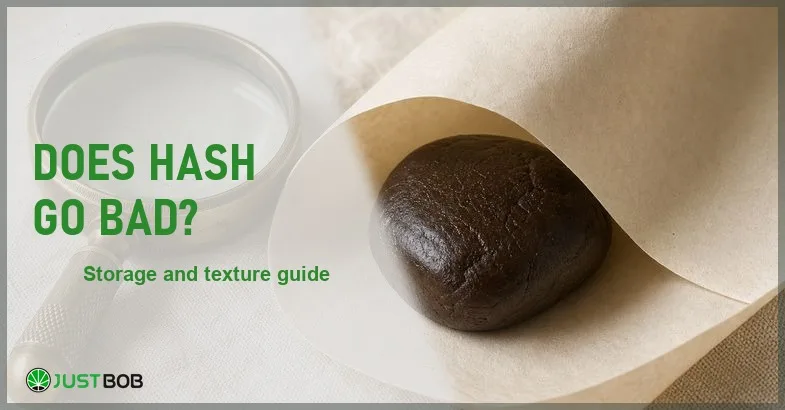
Does hash go bad is the kind of practical question that deserves a clear answer and a good label check. Taken sensibly, it is a question about product condition: how a pressed resin item can change in look and aroma over time, and how the label and document help a reader judge it. This guide keeps the question there, on visible condition and paperwork, and leaves anything beyond the product to one side.
-
 Max CBDAMNESIA CBD BOOSTStarting from: 0,85€/g
Glasshouse | CBD<40%
Grams5 10 20 50 100 200 400 -
Max CBDAK47 CBD BOOSTStarting from: 1,45€/g
Indoor | CBD<47%
Grams5 10 20 50 100 200 -
Max CBDCHARAS
CBD HASH | CBD<45%
Starting from:FLASH SALE -10%
0,90€0,80€/gGrams5 10 20 50 100 200 -
JB OIL 25%Starting from: 14,90€
CBD Oil 25%
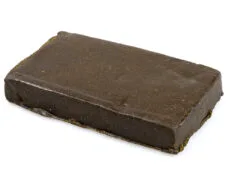
Picture a drawer with a wrapped piece inside, its label and certificate beside it. That is the honest setting for the question. The answer is not a guess about how a piece smells after a year. It is a reading of what the label records and what the surface and aroma plainly show, because an old label is far more useful than an old hunch.
Does hash go bad
Does hash go bad is best answered as a matter of product condition. Like any pressed plant material, CBD hash can change in appearance and aroma over time, drying at the surface or losing some of its scent, drawn from Cannabis sativa L. grown as an agricultural crop. Put plainly, the question is about how a product looks and smells as it ages, and how those visible changes are recorded against the label.
Kept at that level, the question stays steady. A piece may simply read as older, with a drier surface or a fainter aroma, and those are descriptive observations, nothing more. The job of this page is to describe what age looks like on the product and to point a reader toward the CBD hash category, where fresh listings carry their own current documents.
Texture and aroma notes
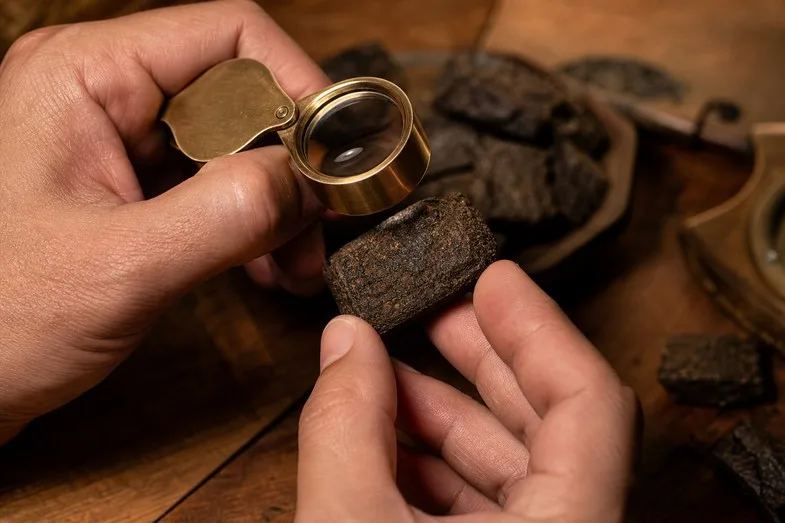
Texture is the first visible clue to condition. An older piece may read as drier or firmer at the surface, where a fresher one looks more even. These are notes about how the product appears, the kind of detail a reader can confirm with their own eyes against the photograph and the description on a product card.
Aroma is the companion clue. The scent of a pressed resin item can soften over time, and a fainter aroma is simply a descriptive observation about an older piece. Both texture and aroma stay at the level of what a reader can see or smell, and they sit beside the figures and the batch number as part of the picture.
Read also: CBD Hash Texture: What Soft, Firm and Crumbly Can Mean
Storage context
Condition is easier to read when storage is plain. A piece kept wrapped, away from strong light and heat, tends to hold its look and aroma longer than one left open, and that is simply ordinary product care. These are descriptive notes about keeping a collector or technical item in good order.
Seen in context, storage and condition fit together. How a product has been kept helps explain how it now looks and smells, and a reader can set those observations beside the date and batch on the label. The point is to read the product as it is, with the visible notes and the paperwork in agreement rather than from memory.
When a label beats a guess
The idea that a printed date beats a sniff is a fairly modern retail habit. Marks and Spencer is often credited with popularising the printed sell-by date in the early 1970s, so a shopper could read freshness straight from the label instead of guessing at it. The date on the wrapper settled the question that a hopeful sniff never quite could.
A product page works on the same plain principle. The honest answer to does hash go bad is the one a reader can check: the date and batch on the label, the certificate for the lot, the visible condition of the piece. The shop printed a date so freshness was a fact, not a hunch; a product page keeps the label and document close so condition can be read off the paperwork and not simply guessed.
Read also: CBD Hash Aroma: How To Read Resin Notes
Labels and documents
Condition only reads clearly if the record backs it. On a product page, three parts of the paperwork do separate jobs, so the piece a reader sees can be placed against the paper that describes it:
- The label records: it carries the date and the batch number for the piece.
- The certificate measures: it states the figures for the lot, with the THC checked against the 0.3 percent threshold and the CBD given as indicative.
- The batch number ties the two together: it links the piece in hand to the row on the document.
This is why a condition note ends at the document, where the lot figures sit inside a clear framework. Our legal hemp note covers the framework these products sit within, and the European Commission page on hemp sets out the wider overview.
Reading hash condition on a Justbob page
On a Justbob CBD hash page, the condition note does a narrow job: the date and batch on the label, the figures stated as indicative, and the certificate that confirms them. Every commercialised product is analysed and each batch is checked, with the document available on the product page, so the piece a reader sees can be traced to the row that records it.
Every product is produced by selected EU hemp partners and sits inside the EU industrial hemp framework, with THC kept at or below the 0.3 percent threshold harmonised at European level. Each one is offered for technical, scientific and ornamental purposes only. On a Justbob page, does hash go bad is answered by a label you can read and a document you can check.
Frequently asked questions about does hash go bad
Does hash go bad?
Read as a matter of condition, CBD hash can change in appearance and aroma over time, drying at the surface or losing some of its scent. Like any pressed plant material, it is drawn from Cannabis sativa L. grown as an agricultural crop. Those are descriptive observations about an older piece, not a judgement about anything beyond the product. The condition is read against the label and the certificate of analysis for the batch, where the date and figures are recorded, so a reader can place what they see against the paper and skip the guesswork.
What details should be checked?
The visible and recorded ones. On the product side, the surface and aroma show how a piece has aged; on the paper side, the date and batch on the label and the figures on the certificate record the lot. Reading those together is how a reader judges condition, with the THC checked against the 0.3 percent threshold and the CBD stated as indicative, rather than relying on memory or a hopeful sniff.
Where do batch documents fit?
The certificate of analysis is where condition is anchored. The label carries the date and batch number; the certificate measures the contents for the lot, including the THC reading checked against the 0.3 percent threshold. Following the batch number from the label to the document is how a reader keeps a condition note anchored to a record they can check.