
Modified on: 02/07/2026
Cannabis mainly produces carboxylated forms such as THCA, CBDA and CBGA, which, through natural transformations and thermal processes, evolve into their neutral counterparts
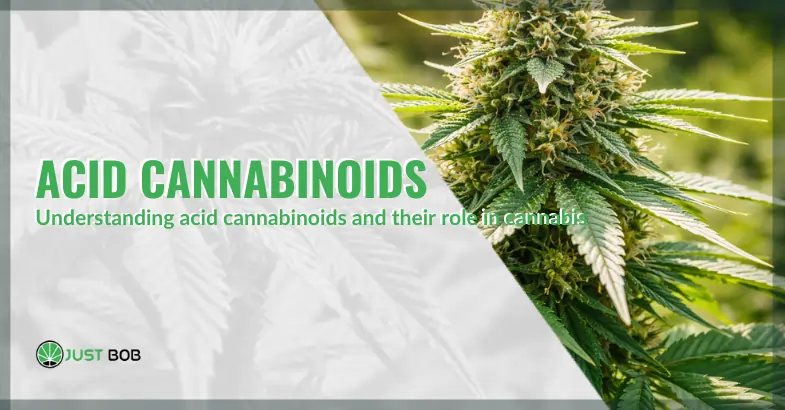
Those who really follow the chemistry of cannabis know this: many discussions are already flawed because they take for granted a point that is actually the most interesting of all. In the vast majority of cases, the living plant does not “produce THC and CBD” as commonly imagined. It mainly produces their acidic forms, such as THCA and CBDA, molecules that are created and accumulated in the glandular trichomes.
This difference is not just a laboratory detail: it changes the way we interpret a chemical profile, how we read an analysis, and how we think about stability, transformations and biological activity.
-
 Max CBDAMNESIA CBD BOOSTStarting from: 0,85 €/g
Glasshouse | CBD<40%
Grams5 10 20 50 100 200 400 -
Max CBDAK47 CBD BOOST
Indoor | CBD<47%
Starting from:HALLOWEEN SALE -10%
1,45 €1,30 €/gGrams5 10 20 50 100 200 -
Max CBDCHARAS
CBD HASH | CBD<45%
Starting from:HALLOWEEN SALE -10%
0,90 €0,80 €/gGrams5 10 20 50 100 200 -
JB OIL 25%Starting from: 14,90 €
CBD Oil 25%
Before getting to the heart of the matter, a word of clarity for our readers: this article is written solely to satisfy the curiosity of enthusiasts and for scientific dissemination. It is in no way intended to encourage the use of substances or illegal or unsafe practices.
The rules on CBD cannabis and its derivatives vary greatly from country to country and often even within the same country: it is essential to always check the laws and comply with them. The aim here is to understand what cannabinoid acids are, how they are formed, how they transform and why research is looking at them closely.
Read also: CBD Oil Emulsion Terminology: Label Notes
What are acidic cannabinoids, explained clearly
The term “acid cannabinoids” refers to secondary metabolites synthesised by the plant that have a carboxyl group in their structure. In practice, they are close relatives of “neutral” cannabinoids (THC, CBD, CBG, CBC), but with an extra “piece” that changes polarity, stability and interactions with biological targets.
The best-known example is the THCA/THC pair: THCA is the acidic form produced by the plant, while THC is the neutral form that can appear following transformations such as decarboxylation. The same applies to CBDA/CBD and CBGA/CBG.
Crist N. Filer’s 2022 review, dedicated to the decarboxylation of acidic cannabinoids, insists on a point that is often confused: these “plant” acids should not be confused, conceptually, with the acidic metabolites that the human body can generate after ingesting neutral cannabinoids. It is an acidity that arises at different times and in different contexts.
Where they originate: trichomes as chemical microfactories
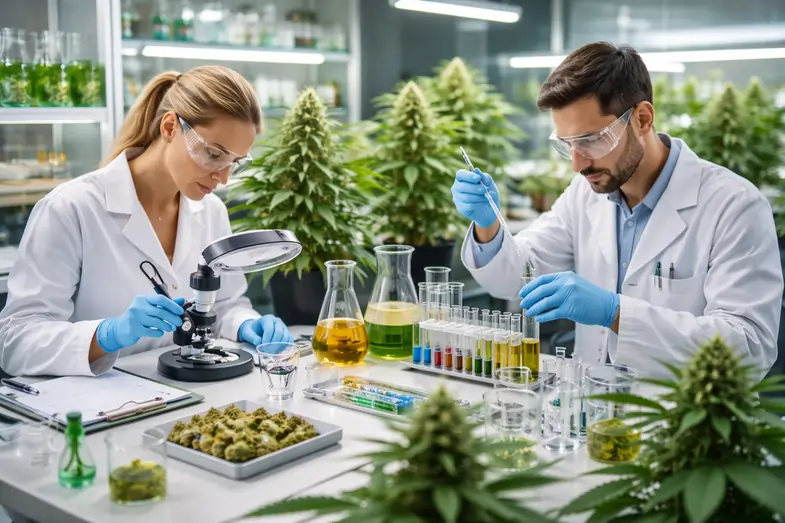
To truly understand the role of cannabinoid acids, we need to look at their “geography” within the plant. Biosynthesis and accumulation occur mainly in glandular trichomes, particularly the capitate-stalked trichomes found in abundance on female flowers. Here, the plant concentrates enzymes, precursors and resins, creating a microenvironment that promotes the production and preservation of these molecules.
The 2024 study in Scientific Reports, conducted on the “Cherry Wine” cultivar, is useful because it compares two matrices from the same plant: the content of the secretory cavity of the trichomes collected with microcapillaries and the extracts of inflorescences dried in the air for 15 days in the dark and at room temperature. The key finding is that the “native” profile of trichomes is extremely rich in carboxylated forms and changes measurably with drying and storage.
Biosynthesis: the path leading to the “father” of cannabinoids
The most widely cited biosynthetic pathway starts with the condensation of geranyl pyrophosphate (GPP) with olivetolic acid (OA). This reaction, catalysed by a geranyl transferase enzyme, generates CBGA, cannabigerolic acid. CBGA is often described as the “mother cannabinoid”, i.e. the central precursor from which several families of cannabinoid acids are derived. The 2026 review in the Journal of Cannabis Research reiterates this: historical attention has focused on neutrals, but the plant first builds acids, and they are the true biological starting point.
From CBGA, specific synthases (oxidocyclic enzymes) direct production towards the main cannabinoid acids:
- THCA via THCA synthase
- CBDA via CBDA synthase
- CBCA via CBCA synthase
There are also variants with a propyl side chain, often referred to as “varines” (e.g. CBGVA as a precursor of THCVA and CBDVA). Here it is worth establishing a concept: cannabinoid diversity is not a whim of chemistry, but a modular biosynthetic system in which enzymes and precursors determine the outcome.
Decarboxylation: the transformation that changes everything
Decarboxylation is the reaction in which a cannabinoid acid loses its carboxyl group in the form of CO₂, converting it into its neutral form (e.g. THCA → THC, CBDA → CBD). This is a crucial step because the pharmacological profiles of acids and neutrals can be very different.
Filer’s 2022 review clarifies “when and where” this conversion tends to increase: a small proportion of neutral forms can already be detected during flowering, but the transformation becomes much more significant after harvesting, during drying, processing, extraction and thermal processes. In high-energy scenarios, such as combustion, the conversion can be substantially complete, although the amount of THC that can actually be recovered may be reduced because some of it degrades or is destroyed by the process.
The 2024 study adds a very concrete piece of information: conversion does not necessarily require “intentional heat” to be measurable. In “Cherry Wine”, after 15 days of drying and storage in the dark at room temperature, the CBD:CBDA ratio changes from approximately 1:99 in the secretory cavity content to approximately 1:20 in the dried inflorescences. This is a simple and powerful way to visualise the direction of change: the proportion of the neutral form increases relative to its acidic form.
Here, conceptual caution is a must: a changing ratio not only tells us ‘how much decarboxylation’ has occurred, it also tells us how difficult it is to preserve an acid profile over time without controlled conditions, because chemistry does not stand still.
Kinetics and variables: why not all acids behave the same
On a kinetic level, much of the literature describes decarboxylation as a process that is often compatible with first-order kinetics under controlled experimental conditions. Filer’s review points to a widespread consensus: THCA tends to decarboxylate more rapidly than CBDA and CBGA under comparable conditions. This is a technical detail, but it has practical consequences for those studying stability and shelf life, and for those who have to interpret analyses on samples collected at different times.
Oxygen is another variable: in oxidising atmospheres, by-products and parallel transformations increase, and the conversion may be less “clean”. The matrix also matters: the review discusses observations that cannabinoid acids “incorporated” into the inflorescence may be more stable than isolated acids, with direct implications for the preservation of “raw” products.
As for light, the review itself urges caution: correlations have been found between UV-B exposure and cannabinoid profiles, but the idea of true direct photolytic decarboxylation remains less solid and has not always been demonstrated in a linear fashion.
Laboratory analysis: when the instrument changes the result
There is one point that readers of analyses should be aware of, as it avoids major misunderstandings: some analytical techniques can alter what they are trying to measure.
There is a known methodological risk: gas chromatography can decarboxylate cannabinoid acids during analysis because the injector and column operate at high temperatures. The result is that there is a risk of “manufacturing” THC or CBD at the very moment they are being measured, distorting the picture of the sample if adequate protective strategies are not used. To truly measure the acid/neutral ratio, techniques such as HPLC (often coupled with MS) are often preferable.
This part is less “romantic” than botany, but it is crucial: without method, even an expert reader risks discussing numbers that do not represent the actual sample.
Pharmacodynamics: why acids are not “inert precursors”
For years, cannabinoid acids were treated as uninteresting intermediates, almost a step below the “important” forms. Research in recent years has debunked this simplification.
A key concept concerns THCA: due to its steric hindrance and greater polarity linked to the carboxyl group, THCA shows negligible affinity for the orthosteric site of the CB1 receptor, which explains why it has no psychotropic or intoxicating effects comparable to THC.
The 2026 review reiterates that “non-intoxication” is one of the reasons why these molecules are considered interesting for research purposes, with one fundamental caveat: if heat is applied, THCA can convert to THC, and the scenario changes.
Then there is the really intriguing part: acidic cannabinoids seem to interact with different targets, often in a pleiotropic manner. In the preclinical literature cited by the 2026 review, certain targets recur:
- COX, in particular COX-2, with signs of anti-inflammatory activity
- TRP channels (such as TRPV1 and TRPA1), linked to nociception and inflammation
- 5-HT1A serotonergic receptors, especially for CBDA, with preclinical indications for nausea and vomiting
- PPARγ, a nuclear receptor linked to lipid metabolism, inflammation and neuroprotection.
Here, caution is needed in the use of language: “potential” does not mean “ready for therapy”, and “preclinical” does not mean “effective in humans”. It means that the map of targets is broader than previously believed, and that acids deserve to be studied as autonomous entities.
Pharmacokinetics: polarity, absorption and the “paradox” of CBDA
From a chemical-physical point of view, the carboxyl group increases polarity: acids are more hydrophilic than neutral forms, which are highly lipophilic. This can alter absorption, distribution and the ability to cross biological membranes.
Chemical instability and bioavailability difficulties are among the main obstacles to clinical translation. There is talk of short half-lives in some models and penetration into the central nervous system that may be limited with “standard” vehicles. On the other hand, the 2026 review emphasises that formulations and delivery strategies can greatly change systemic exposure and, in some contexts, increase the amount that reaches the brain. Moral: pharmaceutical technology is not an accessory, it is part of the problem and part of the solution.
This is where a rather intriguing detail comes into play: in some studies discussed in the literature, CBDA shows signs of greater gastrointestinal absorption than CBD extracts under the same experimental conditions, a result that seems counterintuitive if we consider only lipophilicity. It is not a universal truth valid in every scenario, but it is a clue that explains why acids have become a hot topic for those studying formulations and pharmacokinetics.
Stability and ‘real life’: what the study on “Cherry Wine” really teaches us
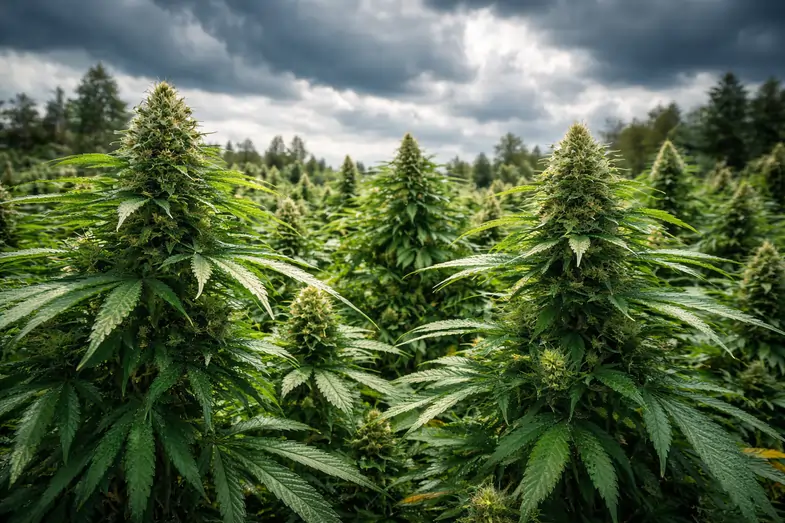
The study “Comparison of decarboxylation rates of acidic cannabinoids between secretory cavity contents and air-dried inflorescence extracts in Cannabis sativa cv. ‘Cherry Wine'” has a particular strength: it takes the discussion out of abstraction and into a measured case. The authors compare the contents of the secretory cavities of trichomes with dried inflorescences, analysed using HPLC. They report that the proportion of cannabinoid acids in the total is lower in dried inflorescences, with reductions in the order of 0.5%–2.4% compared to “trichome” samples. They also indicate the relative percentages of the main acids in the two groups and, above all, the change in the CBD:CBDA ratio to approximately 1:20 after drying and storage.
There is another interesting element: some molecules (such as Δ9-THCV and Δ9-THCVA) are only detected after drying, while CBDVA appears only in the secretory cavity content. Here too, it is best not to turn data into an overly bold narrative: the most cautious interpretation is that drying and storage not only favour a “linear” acid→neutral transition, but may also be accompanied by parallel transformations and more complex changes in profiles.
For those who think like experts, the implicit message is clear: when talking about ‘acid-rich products’ or ‘raw profile’, the question is not only ‘what is in it’, but ‘when was it measured, by what method and under what conditions was it stored’.
Research in 2026: promise, limitations and the most sensitive issue
The review “Therapeutic potential of acidic cannabinoids: an update”, published on 16 January 2026 in the Journal of Cannabis Research, attempts to bring some order to the field: THCA, CBDA, CBGA and CBCA are presented as pharmacologically active compounds, with preclinical indications in areas such as inflammation, pain, epilepsy, oncology and neurodegeneration. The picture is rich and, in some ways, seductive, because it talks about multi-target molecules without the psychotropic effects linked to CB1 typical of THC.
The most delicate point, however, is the one that separates a fascinating article from responsible information: the review clearly points out that there are not enough controlled trials on humans, in terms of both number and quality, to transform these signs into robust clinical conclusions.
In addition, the presence of acids in commercial products poses problems of labelling, standardisation and purity control. Translation, to put it bluntly: acid cannabinoids are a promising frontier for research, but they are not a shortcut, nor a guarantee, nor a field in which to make definitive statements.
A useful way to think about them: three questions that change your interpretation
If you want to develop a solid mental model without trivialising the issue, try asking yourself three questions every time you read “THCA”, “CBDA” and similar terms.
The first: was this molecule observed in the living plant, in an extract or in a processed product?
The second: what analytical method was used, and could it have decarboxylated the sample during measurement?
The third: how much time passed between harvesting, storage and analysis, and under what conditions?
These may seem like nitpicky questions, but they are the line between a competent discussion and a confused one.
Read also: Cannabis Alkaloids Uncovered: The Hidden Chemistry of the Hemp Plant
What we know, what we don’t know, why it’s worth finding out
Cannabinoid acids are not newcomers. They are the “original” form with which cannabis builds most of its chemical profile, and today they are also considered autonomous pharmacological entities, with targets and behaviours that do not coincide with those of neutral cannabinoids. Decarboxylation remains the watershed step: it can occur significantly with thermal energy, but it can also proceed in part during drying and storage, as shown in the study on “Cherry Wine”.
The most recent research is looking at them with interest for preclinical signals on inflammation, nausea, neuroprotection and other areas, but caution is not a vice: robust clinical confirmation is still lacking, and instability, formulation and standardisation remain real obstacles.
Justbob publishes this content exclusively for informational purposes, to fuel informed and responsible curiosity, in full compliance with the laws of its country. If this journey through trichomes, synthase and decarboxylation has sparked a few more questions, see you in the next article on the vast universe of CBD weed.
Acid cannabinoids: Takeaways
- THCA, CBDA and CBGA represent the biologically original form of cannabinoids in the living plant and accumulate in glandular trichomes; neutral forms such as THC and CBD arise mainly through physical and chemical transformations, particularly decarboxylation.
- Heat, time, oxygen, light and the plant matrix all influence the conversion from acidic to neutral forms, which can occur to a measurable extent already during drying and storage, even without intentional heating.
- Preclinical evidence suggests interactions with targets other than CB1 and the absence of intoxicating effects; however, chemical instability, pharmacokinetic limitations and the lack of robust clinical studies require a cautious and scientifically grounded interpretation of their potential effects.
Acid cannabinoids: FAQ
What are acidic cannabinoids in cannabis?
Acidic cannabinoids are secondary metabolites naturally produced by the cannabis plant that contain a carboxyl group in their chemical structure. Examples include THCA, CBDA and CBGA, which are the original forms synthesised and accumulated in glandular trichomes before any transformation into neutral cannabinoids such as THC or CBD.
How do acidic cannabinoids turn into neutral cannabinoids?
Acidic cannabinoids convert into their neutral counterparts through a process called decarboxylation, during which the carboxyl group is lost as CO₂. This transformation can be promoted by heat, but it can also occur gradually during drying, storage and processing, even without intentional heating.
Do acidic cannabinoids have biological activity on their own?
Yes, current preclinical research suggests that acidic cannabinoids are not inert precursors. They interact with multiple biological targets, such as COX enzymes, TRP channels, serotonin receptors and PPARγ, and they do not show intoxicating effects associated with CB1 activation. However, their clinical potential is still under investigation and requires cautious interpretation.