Modified on: 11/08/2026
The plant does not make CBD. It makes CBDA, and then time gets involved
Here is the part that surprises people: a living hemp plant contains almost no CBD. What it produces is CBDA, cannabidiolic acid, and CBD appears afterwards, as that acid loses a small piece of itself to heat and time. CBDA vs CBD is therefore less a rivalry than a before and after.
-
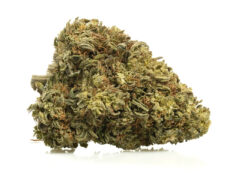
 Max CBDAMNESIA CBD BOOSTStarting from: 0,85€/g
Glasshouse | CBD<40%
Grams5 10 20 50 100 200 400 -
Max CBDAK47 CBD BOOSTStarting from: 1,45€/g
Indoor | CBD<47%
Grams5 10 20 50 100 200 -
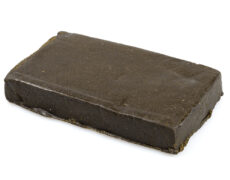
Max CBDCHARAS
CBD HASH | CBD<45%
Starting from:FLASH SALE -10%
0,90€0,80€/gGrams5 10 20 50 100 200 -
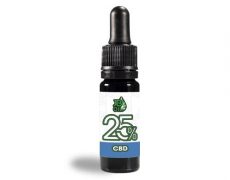
JB OIL 25%Starting from: 14,90€
CBD Oil 25%
That single fact explains most of what looks confusing on a certificate of analysis: two similar names in two separate rows, a third figure called total CBD that matches neither, and a multiplier of 0.877 sitting in a footnote. This guide walks through the chemistry in plain terms and then reads the document.
One carboxyl group apart
CBDA is the acid form of cannabidiol. Chemically it is the same skeleton with one extra part attached: a carboxyl group, a small cluster of one carbon and two oxygens hanging off the ring.
That group is the entire difference. Everything else about the molecule matches. CBDA is what the trichomes of a growing plant are full of, and it is the form that dominates in fresh material.
Read also: Minor Cannabinoids In Hemp: A Clear Guide
CBGA, the branch point
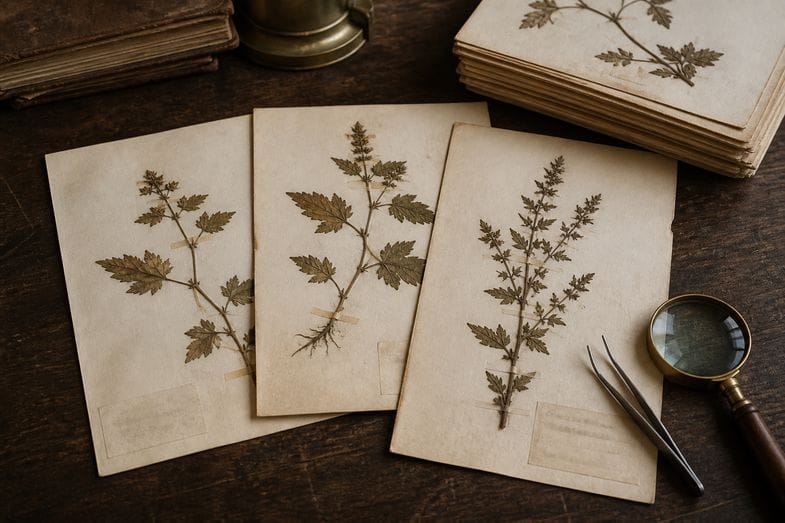
Step back one stage and the family tree gets simpler. The plant first builds CBGA, cannabigerolic acid, which chemists like to call the mother cannabinoid because everything else descends from it. Enzymes then convert CBGA down one of several routes: one synthase produces CBDA, another produces THCA, a third produces CBCA.
Which enzyme dominates is genetics, not processing. A registered hemp variety therefore produces mostly CBDA and very little THCA, which is the whole reason varietal registration carries so much weight in European rules.
One chemical step: decarboxylation
Decarboxylation is the name for losing that carboxyl group. The molecule releases it as carbon dioxide, and what remains is CBD.
It happens gradually with time and more quickly with heat. Drying and curing start the process, storage continues it slowly, and any warm step accelerates it. This is not a treatment applied to a product; it is a reaction that begins the moment the plant material dries and never entirely stops.
The rate is not fixed either. Published work comparing fresh plant material with air-dried extracts has found meaningfully different conversion rates, which is a good indication of how much the starting condition of the material matters.
Why 0.877 appears on a certificate
This is the practical payoff, and it is the reason the two names matter to a buyer at all.
A laboratory measures CBDA and CBD separately, because they are separate molecules. It then reports a third figure, usually labelled total CBD, which answers the question: if all the CBDA present were converted, how much CBD would there be?
You cannot simply add the two numbers, because CBDA is the heavier molecule. Removing the carboxyl group removes mass. The ratio of the two molecular weights works out at roughly 0.877, so the calculation is:
total CBD = CBD + (CBDA x 0.877)
The same arithmetic, with the same factor, produces total THC from THC and THCA, so the figure often appears twice on the same document. If you take one thing from this article, take this: total CBD is a calculated value, not something anyone measured.
Read also: What are CBD crystals?
Two labs, two readings, one sample
There is a wrinkle worth knowing about, and it explains a lot of apparent contradictions between documents.
Gas chromatography heats the sample as part of the analysis. That heat decarboxylates the acids inside the instrument, so the acid forms are converted before they are counted and the method reports the neutral forms. Liquid chromatography does not heat the sample the same way, so it can report CBDA and CBD as separate rows.
Research published in Pharmaceutics in 2025 examined exactly this, finding that incomplete decarboxylation during gas chromatography can lead to underestimating total cannabinoid content. The practical lesson is simple: when two certificates disagree, check the method before assuming one of them is wrong.
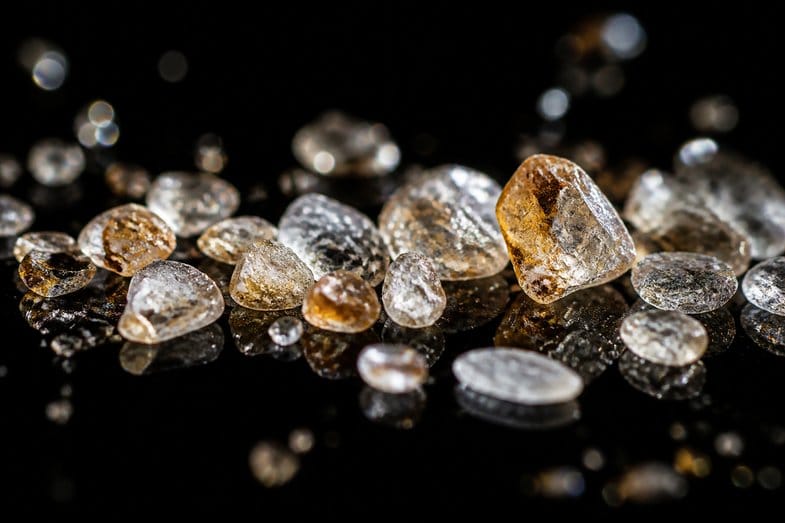
How the two words appear on a product page
On a listing, the acid form usually stays behind the scenes. A CBD extracts page states an indicative CBD percentage, and the certificate behind it carries the detail: CBDA in one row, CBD in another, a total below.
Full spectrum descriptions sometimes mention the acid forms explicitly, since they are part of what the phrase is pointing at. The distinction between CBDA and CBD is also a good reminder of why product language and certificate language are not the same register. Our guide to CBD and THC in product language covers the neighbouring confusion.
The short chain from plant to certificate
CBDA is what the plant makes; CBD is what CBDA becomes once the carboxyl group leaves. One reaction separates them, one factor of 0.877 connects them on paper, and the analytical method decides which of them a document shows you.
The certificates behind the Justbob catalogue are exactly the documents this article has been describing, with the acid and neutral rows and the calculated total sitting where you would now expect to find them. What they cover is offered for research, technical and collector use.
Frequently asked questions about CBDA and CBD
What is the difference between CBDA and CBD?
One chemical group. CBDA, cannabidiolic acid, carries a carboxyl group that CBD does not have, and it is the form the living plant actually produces. CBD appears when that group is released as carbon dioxide, a reaction called decarboxylation that proceeds slowly with time and faster with heat. Apart from that group, the two molecules share the same structure.
What does total CBD mean on a certificate?
It is a calculated figure rather than a measured one. A laboratory reports CBDA and CBD separately, then estimates how much CBD would exist if all the CBDA were converted, using the formula total CBD equals CBD plus CBDA multiplied by 0.877. The factor comes from the difference in molecular weight between the acid and neutral forms, since removing the carboxyl group removes mass.
Where does CBDA come from in the plant?
From CBGA, cannabigerolic acid, which is the shared starting material for the main cannabinoids. Enzymes convert CBGA along different routes: one produces CBDA, another produces THCA, another produces CBCA. Which route dominates depends on the genetics of the variety, which is why registered hemp varieties produce mostly CBDA and only trace THCA.
Why do two certificates for the same material disagree?
Often because of the analytical method. Gas chromatography heats the sample and converts the acid forms during the analysis, while liquid chromatography can report the acid and neutral forms as separate rows. Comparing a figure produced by one method with a figure produced by the other, without noting which is which, is a common source of confusion.